

Today, it is possible to optimise business processes through digital solutions such as B2C and B2B online ordering portals, booking systems, mobile applications, and self-service payment solutions. These are no longer just add-ons but part of the company’s everyday business logic, helping reduce manual work and focus on what creates competitive advantage and delivers the most significant value.
To meet customer expectations, companies need to offer technology solutions that take into account their customers’ specifics and needs – from self-service environments and mobile apps to loyalty programmes. These digital solutions have become a must-have extension of the business, helping to keep the focus on revenue growth and the customer.
Below are five practical examples of how self-service solutions have helped companies simplify work, improve the customer experience and grow their business.
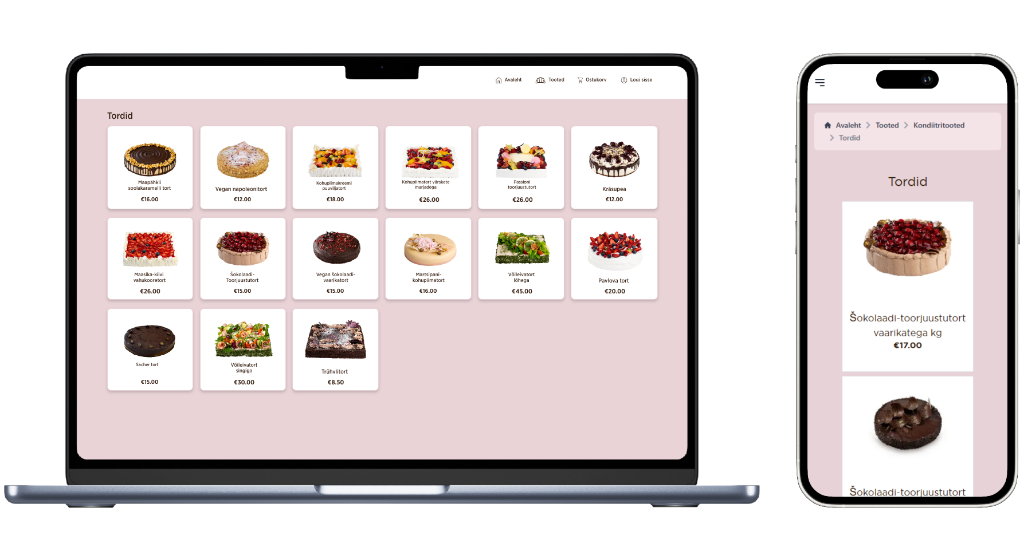
Imagine a local bakery that processes dozens, sometimes hundreds, of orders every day from both retail and business customers. Every order needs to be clarified, confirmed and invoiced.
In practice, this usually means several different software tools for the company – ERP, Excel, a POS system and an accounting programme that, nine times out of ten, do not communicate with each other.
B2B customers often have special agreements and unique needs, which makes the process even more time-consuming. Ultimately, staff can spend up to 20 minutes entering a single order into the system.
A self-service ordering environment integrated with a comprehensive ERP system brings all these processes together into a single, coherent system.
The ERP system communicates directly and in real time with the café’s POS system, which, in turn, is linked to the warehouse management system. This eliminates errors caused by manual data entry and reduces staff workload when handling orders.
Fewer emails and phone calls, less manual data entry and more time for production, sales and delivering quality customer service.
When a company operates in several cities or countries, sharing information and coordinating work quickly becomes a challenge. Multiple spreadsheets, files and email threads create a situation where it is difficult to exchange, find and keep critical information up to date in real time.
An intranet acts as the company’s information hub, bringing together everything needed – price lists, feedback, orders, invoices, visual materials and customer complaints.
Re-sellers, sales teams and project managers get an instant overview of process status, stock levels and price changes – regardless of their location.
Thanks to automated reports, management has a clear overview of sales performance and the status of projects and work across different markets and partners. Service teams can pre-reserve the tools and equipment they need from the warehouse for each specific job.
An intranet speeds up decision-making, ensures smoother internal communication and helps improve the quality of customer service.
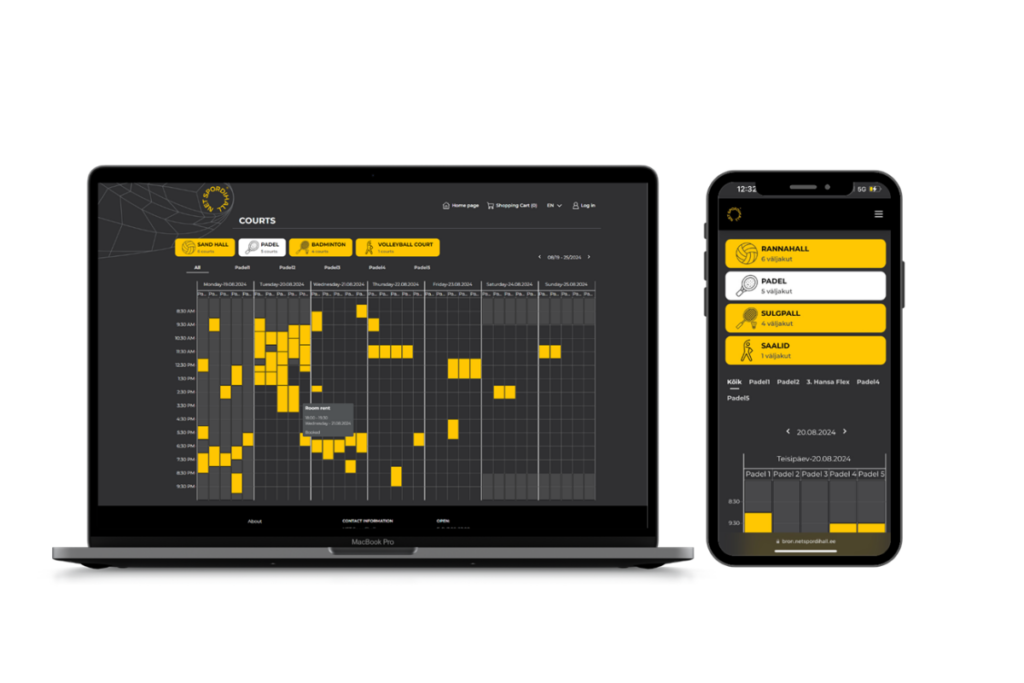
Time-consuming manual work with emails, phone calls and messages to manage bookings is still very familiar to most sports clubs today. Many hotels are still looking for fully automated solutions on top of their standard booking systems.
An automated booking system allows customers to choose a suitable time or service independently via the web or mobile devices, without contacting a customer service representative.
During the booking process, the customer can pay for the reservation immediately, add additional information and automatically receive an invoice for the service, as the entire system is integrated with the ERP and data moves in real time.
This enables faster and more accurate planning and, for example, improves the utilisation of sports facilities or reduces cancellations at tyre services and car washes. For car rental companies, it means faster information flow, freeing up time slots in real time and managing schedules more efficiently.
The entire process is transparent and straightforward for the customer – bookings can be made on a mobile phone, tablet or computer using different authentication methods. Payment is made conveniently in the same environment, and the customer receives confirmation by email or as a QR code.
Additional value comes from the ability to integrate the system with a loyalty programme that rewards active visitors and encourages repeat bookings.
The result is a pleasant, innovative user experience for customers and higher occupancy.
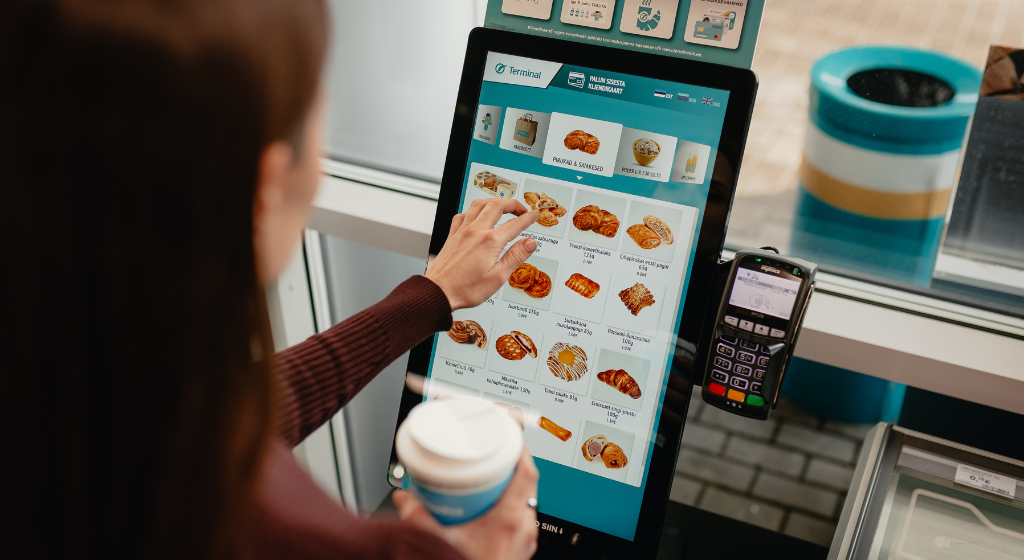
The adoption of self-service solutions has skyrocketed in recent years, driven by both cost reduction and changing buying behaviour. Customers prefer fast, convenient and contactless solutions.
At the same time, companies see self-checkouts as a way to ease pressure from labour shortages and increase sales revenue.
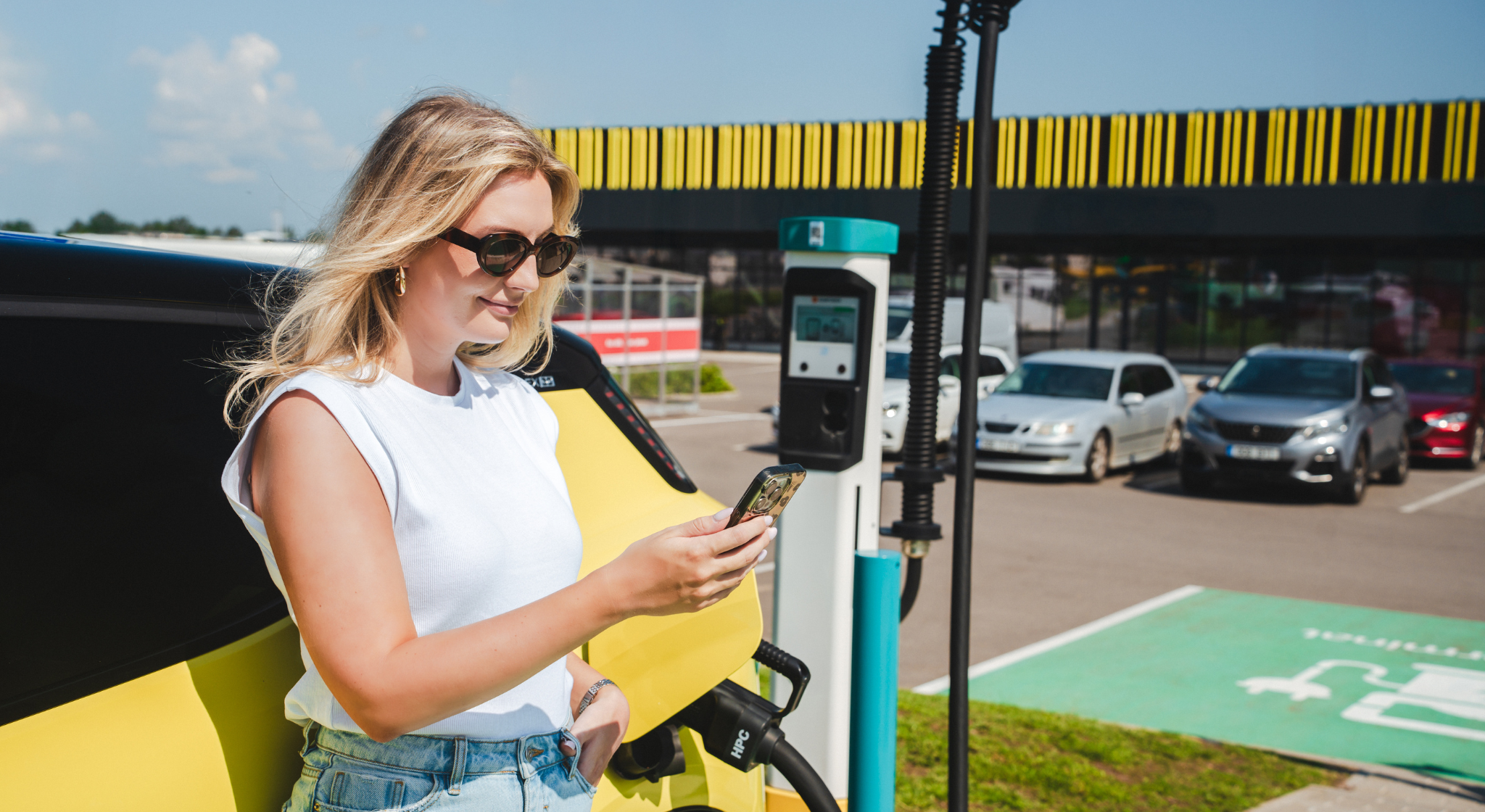
Self-checkout allows customers to complete their purchases quickly and securely without waiting in the checkout line.
Customers can choose and pay at their own time and pace, whether they are in a pharmacy, an electronics store, a car wash, or a fuel station. This makes the shopping experience more personal, while reducing waiting times and increasing product availability.
For businesses, this means a significant increase in efficiency.
Manual work and queues are reduced, and staff can focus on advising customers and creating upsell opportunities.
Many jobs and services are by nature mobile. Work is carried out outdoors, on sites or at customers’ premises. This means that the need to enter data and report arises in the working field, not in the office.
Mobile applications help move reporting and data entry points to where the work actually takes place. In retail, customer-facing apps are already commonplace, including pre-ordering food or products.
In reality, this is only a small part of what’s possible.
The same technology can be used to plan maintenance team work, report from sites, or manage warehouse and logistics tasks.
For example, a mobile app can be used to record completed work, capture the customer’s signature or confirm the delivery of goods.
A mobile app can also serve as a self-service portal, extending the company’s website. Everyday examples include banks, waste management services, and energy service providers.
Customers can log in, order additional services, change contracts or submit requests using secure authentication methods.
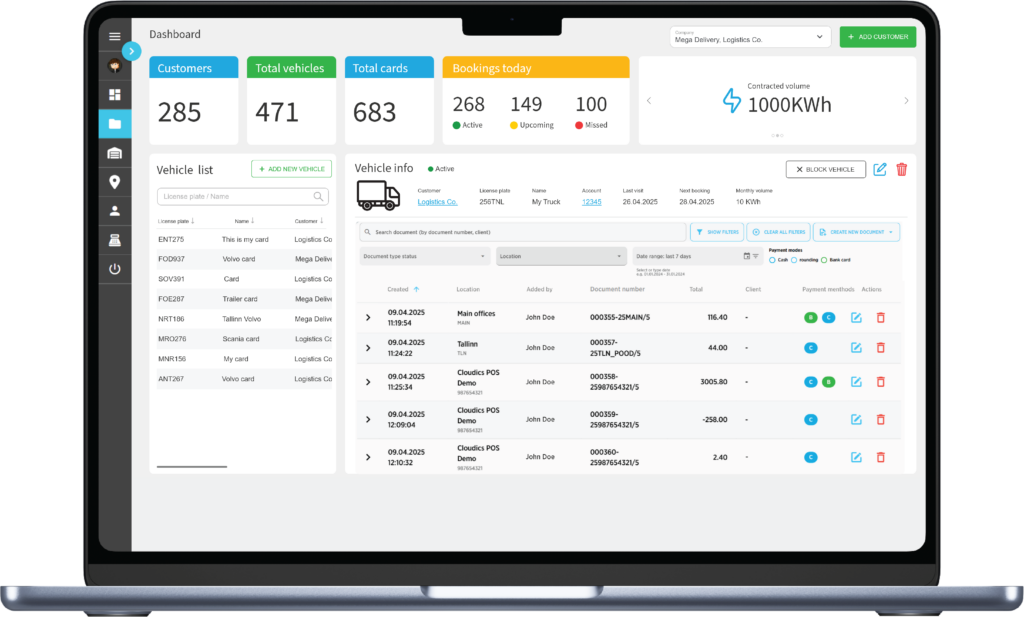
In addition, because the mobile app is linked to a central ERP system, managers can monitor work processes in real time. A dedicated management dashboard provides clarity, better planning, and faster response time.
Self-service solutions are a logical extension that supports the growth of a modern company.
Whether it’s an ordering environment, a booking system or a mobile app.
Every automated step frees up employees’ time, reduces errors and improves the customer experience.
Contact us, and we will help you understand where your processes slow down and propose the right digital tools to improve them – from idea to ready-to-use solution.
Astro Baltics has been part of the Estonian IT landscape since 1998, providing comprehensive software solutions for both businesses and vital services.
We build solutions that keep Estonia’s energy stations, pharmacies, retail chains and manufacturing companies running. With the same thoroughness and reliability, we develop self-service solutions that help your business grow.
We have been at the forefront of innovation, creating functional and sustainable digital solutions for companies in Estonia and on international markets. Our solutions serve more than 500 businesses in Estonia and over 500,000 end customers worldwide.

Mai Mitt
Head of the Sales and Marketing department
+372 628 0000
myyk@astrobaltics.eu
Astro Baltics
Guide to the future
astrobaltics.eu